Showing posts with label Victorian. Show all posts

Saturday, May 5, 2012

JVC Bloggers Fair

The Journal of Victorian Culture Online website is staging a Bloggers Fair this month. Each day a new blog is featured; the author reflects on its content and discusses their motive(s) for writing.  So far, Rohan Maitzen’s Novel Readings and Mark Blacklock’s The Fairyland of Geometry have enjoyed the spotlight, as has Looking Glasses At Odd Corners.

Looking Glasses At Odd Corners as featured in the JVC Online Bloggers Fair,
2 May 2012

A feature on this blog was used to ‘launch’ the Bloggers Fair and very soon my article on early career Victorianists and social media will be published (and made open access). This article will, I hope, help to contextualise JVC's Bloggers Fair by exploring the processes, purposes and motives at work in the Victorian (and neo-Victorian) blogosphere.


I will update the following list as the Bloggers Fair progresses:

Life-writing and life narrative across media and genres.


2. The Fairyland of Geometry by Mark Blacklock
Nineteenth-century engagements with ‘higher dimensional’ space.


3. Novel Readings by Rohan Maitzen
Reflections on reading, research and teaching.


4. Art and Perfume by Christina Bradstreet
Smell in nineteenth-century art and culture.


5. A Special Mention by Gaby Malcolm
Reflections on research, with particular reference to Mary Braddon.


6. The Old Curiosity Shop by Jolette Roodt
Links to Victorian-related websites and posts that focus on new books about the period.


7. Research Blog and Teaching Blog by Charlotte Mathieson
Reflections, reviews and discussions of nineteenth-century literature and contemporary resonances.


8. Neo-Victorian Thoughts by Louisa Yates
Reflections on how the Victorians and Victoriana reveal themselves in contemporary culture.


9. Girls' Literature and Culture by Michelle Smith
Reflections on how girls are situated in nineteenth-century and contemporary popular culture.


10. Scotland's History Uncovered by Lynne Wilson
Scottish social history, with particular reference to the Victorian period.


11. North East Nineteenth Century by the North East Postgraduate Research Group for the Long Nineteenth Century
Community blog run by postgraduates at the Universities of Newcastle, Northumbria and Durham. Events, calls for papers, discussion and information about group members.

Sunday, April 29, 2012

Nineteenth-Century Memory: On Biography, Forgetfulness and Not Knowing

Sundial, St Peter's Church, Norton Disney
Photograph by J. Hannan-Briggs
Used under the Creative Commons License
In March this year I attended a conference at Leeds Trinity University College on the theme of Nineteenth-Century Memory: Approaches and Appropriations. Papers ranged broadly, from Victorian accounts of the recent past to NeoVictorian re-imaginings, from trauma and melancholy to tropes of time passing.

Of particular interest to me were papers on the subject of memory and life narrative, including Jo Taylor (Keele) on the posthumous reputation of Samuel Taylor Coleridge as shaped by the editorship of his children, Sara and Hartley, and Hana Leaper (Liverpool) who traced the influence of Leslie Stephen’s Mausoleum Book on the work of Virginia Woolf and Vanessa Bell. And it was Victorian biography -- a much-maligned genre -- that provided the subject matter for Trev Lynn Broughton’s (York) opening keynote on the topic of remembering and forgetting.

Broughton challenged the notion that remembering and forgetting are opposite terms. To forget something, she argued, was not simply a case of failing to remember. Turning to biography, so often seen (in its Victorian manifestation) as a ‘site and sign of repression’, a literary form in thrall to censorship and reticence, forgetfulness can be read as a creative act. In organising a life into a coherent narrative, biography is necessarily selective; it chooses what memories to transmit to a new generation of readers, and it chooses what elements to pass over, to omit or obscure. For Broughton, therefore, biographies are both a ‘memorial’ and a ‘site of burial’ -- in remembering their  subject, they demonstrate the importance of forgetting.

The endlessly re-tellable nature of life narratives supports this reading of biography as a product of forgetfulness. With each new version of a life -- with each new claim to have written the “definitive” account -- different elements are remembered and forgotten, different memories are uncovered and buried. But is it ever possible (or desirable) to remember and memorialise a life both entire and complete? Alongside remembering and forgetting, should we consider the problem of not knowing?

In 1927, E.M. Forster delivered the Clarke Lectures at Trinity College, Cambridge, published later that year under the title Aspects of the Novel. In these lectures Forster drew a distinction between ‘Homo Fictus’, the species of human living in fiction, and ‘Homo Sapiens’, the species of human living in history [1]. What separates these different classes of being is their un/knowability:

In daily life we never understand each other, neither complete clairvoyance nor complete confessional exists. But people in a novel can be understood completely by the reader, if the novelist wishes; their inner as well as their outer life can be exposed. We cannot understand each other, except in a rough and ready way; we cannot reveal ourselves, even when we want to; what we call intimacy is only makeshift; perfect knowledge is an illusion. But in the novel we can know people perfectly. [2]

It is beyond the scope of this blog post to debate Forster’s claims for status of characters in fiction, but his account of the unknowability of ‘Homo Sapiens’ helps shed a light on the vitality of remembering and forgetting in life-writing. If our knowledge of a biographical subject is ‘illusive’, then remembering and forgetting are the means by which we construct this illusion. In remembering certain elements and forgetting others, we cover and smooth the gaps and fractures -- we can thus stake a (false) claim to the “definitive” life. And yet, it is the unknowable nature of ‘Homo Sapiens’ -- the very impossibility of ‘clairvoyance’ or ‘complete confessional’ -- that empowers the biographer to remember and forget, which guarantees the re-telling, the re-writing, the re-membering of a life narrative.


[1] E.M. Forster [1927], Aspects of the Novel (London: Edward Arnold, 1945), p. 78.
[2] Forster, Aspects of the Novel, pp. 67-8.

Sunday, February 5, 2012

On Academic Blogging

Become a Famous Blogger by Dave Walker
Source: We Blog Cartoons
I’ve been thinking a lot about blogging recently, and about academic blogging in particular. Why do academics turn to the blogosphere? What motives lurk behind this practice, and how do academics perceive their online identity? Do they view their online presence as part of, or separate from, the multiple performances that comprise their professional identity, e.g. conference participation, print publication and teaching?

Over the last few days I’ve put together a rather crude questionnaire intended to probe academic bloggers, to get an insight into their motives, uses and the benefits of their blogging activities. Since the result of my ponderings will be distilled into an article for a Victorianist journal, I have sent this questionnaire to three bloggers working in the broad field of Victorian Studies:


  • Charlotte Mathieson, a literary scholar and Associate Fellow at the University of Warwick. Charlotte blogs on two institution-hosted sites: her own research blog dedicated to her work on mobility and travel in the nineteenth century, and she contributes to 'Researcher Life', a communal blog designed to support early-career researchers.

  • Bob Nicholson, an historian and doctoral student at the University of Manchester who has recently taken up a Lectureship at Swansea University. Bob­—or his online alter-ego—blogs at ‘The Digital Victorianist’ site, complete with his own logo. As the name suggests, one of Bob's many interests is the impact of digital and online technologies on humanities research.

If you are not familiar with these blogs, I urge you to visit and explore!


You may have noticed a further link between these three 'case study' bloggers, something other than their shared interest in all things Victorian. All are early-career researchers, much like myself (all this means is that the PhD is being worked towards, or has been awarded in recent years—eight years, for the purposes of the AHRC). I’m particularly interested in why these young, up-and-coming researchers have turned to social media, and I’m looking forward to receiving their responses to the questionnaire!

All this questioning of others, however, has made me consider more closely my own motives for starting a blog. In the first instance, I wanted to write something that people might actually read (doctoral theses tend to collect dust on University library shelves) and to do this in a style, a language that was more conversational, more open and less exclusive than the ‘academic voice’ I had used elsewhere. I also wanted to get beyond the Victorian and the early-modernist period, much as I love them. I wanted to extend my interest in life narratives beyond the boundaries I had previously set in my research, broadening my view to include contemporary events, new media, film and television. Though, if you scan through my posts, you will find a lot of Victorian-inspired delights, you’ll also find posts on biopic, documentary, Monty Python and souvenir tea-towels (yes, seriously). I wanted to make the process of research visible (in posts such as this) as well as the polished final product. And yes, I wanted to raise my profile, to engage in shameless self-promotion -- the nebulous concept of 'impact' is something I will have to tackle as I write the article.

I’ll be examining these motives more closely as I write my article over the next few weeks, and it will be an interesting challenge to adopt this reflective writing position.

But dear reader, do you blog? And why? What are the reasons and what are the benefits? Pray, do tell…

Wednesday, January 18, 2012

On Blogging and Being Busy

Little Crackers
Source: Sky 1
Regular visitors to the blog will no doubt have realised this is not the long awaited third instalment of my series on celebrity memoir. Be assured this post is on its way and will feature a discussion of Little Crackers, a series of mini celebrity biopics aired on Sky 1 over Christmas.

But in my first post, I described this blog as ‘a life narrative of my very own’. And so, it only seems appropriate that I interject a brief, autobiographical account of what I’ve been up to, the projects I have on the go, and how these relate not only to life narrative, but also to the act of blogging.

What’s the phrase? We apologise for the disruption, normal blogging services will be resumed as soon as possible. But why the disruption? In brief, I’ve been busy. January has brought with it the beginning of a new semester and an increased teaching load. But there is much to look forward to, and two of the modules I am teaching will involve the study of life narratives. (Life writing continues to be under-represented on university syllabi, most often limited to specialist modules, read in isolation, and only rarely alongside other texts and genres.)

An Account of the Trial Execution and
Dying Behaviour of Henry Fauntleroy (1824)
Source: Criminal Broadsides Project
Harvard Law School Library
In Prison Voices at LJMU I will be making use of eighteenth- and nineteenth-century criminal broadsides (many courtesy of the Old Bailey Online). Published and sold to accompany public executions, these pamphlets contain the fictive, “ventriloquised” confessions and laments of criminals -- a macabre souvenir of the day.

I will also be teaching a survey course for the Open University on The Arts Past and Present (AA100). The module ranges across disciplines, from philosophy to music, religion to architecture, literature to film. The course is arranged into four thematic books, the first of which is titled Reputations. This book investigates the concept of fame (and infamy) and how the biographical/historical record shifts and changes, how lives are constructed and reconstructed, how reputations wax and wane, ebb and flow.

This has been a topic of interest in my own work, and last year I published an article exploring competing accounts of Vita Sackville-West’s life and how her sexuality has been subject to successive concealments and revelations. It will be a treat to return to these issues, to investigate new and different case studies (and these will include Cleopatra, Stalin and the Dalai Lama).

I’ve also had a few exciting commissions in recent weeks. I’ve been invited to become a guest blogger at JVC Online (the virtual counterpart to the academic journal, Journal of Victorian Culture). So keep a look out for link ups and re-posts between this blog and JVC Online!

I’ve also been invited to write a short article on blogging and Twitter in the field of Victorian Studies. Now this may raise a few eyebrows. Academics have a reputation for resembling their research and many terrible stereotypes result: historians are as dusty as archives; artists are bohemian; mathematicians are bespectacled and methodical. From the outside looking in, therefore, Victorian Studies might not seem particularly fertile ground – surely we’d all be happier communicating via the telegraph and through letters with a penny black stamp? Well, you might be surprised. There are so many interesting Victorian bloggers and tweeters, and the field of Victorian Studies has produced a vast and diverse array of digital projects, such as the Nineteenth-Century Serials Edition, the Database of Mid-Victorian Wood-Engraved Illustration, and Charles Darwin Online (to name but a very few).

As I set out on my adventures through the Victorian Studies blogosphere, look out for posts and tweets asking for your opinions and input. To what uses are blogs and Twitter put in the field of Victorian Studies? Do users represent a distinct demographic? Are they PhD students and early career academics? Are they on the receiving end of bemused looks and skepticism from more senior (and older) colleagues? Or, is this an unfair distinction? What identities are adopted and performed by Victorian Studies academic and enthusiasts in the blogosphere and on Twitter? I’ll be considering all of these questions in the coming weeks, so get your thinking caps on!

Thank you for your patience; normal blogging services will now resume…

Monday, October 31, 2011

Crossing Over

Source: Wikipedia
I was particularly struck by an article in this week's Times Higher Education: ‘Through the eyes of others (27 Oct–2 Nov 2011). It asked what the positives and pitfalls are of ‘crossing over’ as a life writer, of writing the life of a differently-gendered subject. Can a woman write the life of a man, and vice versa?

The article’s author, Matthew Reisz, surveyed the opinions of various biographers. Many argued for the neutrality of the biographer-subject relationship. For Frances Spalding, gender should present no obstacle: “the notion that certain subjects should be barred to certain people is abhorrent.” For Miranda Seymour, the biographer must adopt the imaginative stance of the fiction writer and “write about either sex with equal empathy and confidence.”

None of the biographers surveyed came out in favour of gender-limited subject choices -- none argued that women should stick to women, and that men should stick to men. Indeed, the benefits of ‘crossing over’ were vehemently defended. Rather than life-writing seeking to transcend the biases and perspectives of gender, to approach all subjects from a position of neutrality, Jane Ridley celebrated the insights afforded by gender difference. She rejected the notion that biographers must “unsex themselves”. Choosing instead to embrace and exploit the gender divide in her own work, emphasising the lives of women in male-dominated spheres and claiming a privileged, yet decidedly gendered view: “As a woman I am more detached, and I hope that I can combine sympathy with salty scepticism.”

In current life-writing theory, much is made of the relationship between the life of the subject (whether biographical or autobiographical) and the lives of others. Theorists have sought to understand how encounters and interactions with relatives, friends and passing strangers impact upon our self-understanding(s). Recent work has also stressed the relationship between different versions of the same life, between different life narratives in successive biographical texts (and I count myself among this number; you can read my article on the different literary ‘portraits’ of Vita Sackville-West here). But we haven’t fully investigated the relationship between biographer and subject, nor the significance of those threads that connect and separate (such as gender, but also race, ethnicity, sexuality, etc). To what extent does the biographer-subject relationship, real or empathetically imagined, gendered or otherwise, function as a ‘script’ that shapes and forms the resulting narrative?

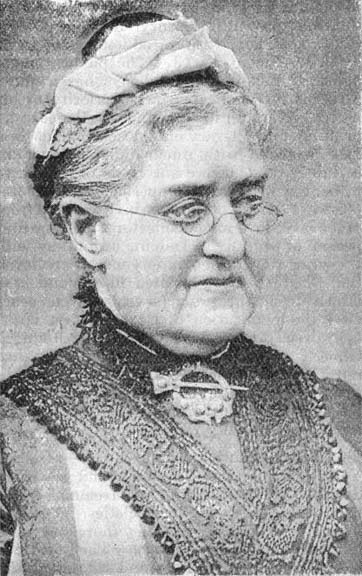
Eliza Lynn Linton
Source: Victorian Web
‘Crossing over’ in life-writing has been something of a hot topic this week. It has also been brought to my attention by the recent arrival through the post of Eliza Lynn Linton’s ‘autobiography in drag’, the gender-bending The Autobiography of Christopher Kirkland (first published in 1885; reissued in 2011 by Victorian Secrets). Though we are unlikely now to be surprised by a nineteenth-century woman writer adopting a male pseudonym, there is something distinctly ‘queer’ about this case.

Linton did not require a male pen-name to facilitate her entrance into the literary public sphere; she was already a well-known writer in her own right, and in her own name. Rather, the shift in gender enables (and mitigates) a rather frank revelation of lesbianism. I’m looking forward to reading this book over the coming weeks, and I’ll be keen to see whether Linton’s “literary transvestism” (as it is described on the back cover) is truly liberating. Will the adoption of a male persona restrict Linton’s narrative in other ways? Will it require a certain performance in terms of plot and gendered speaking posture? I guess I’ll have to get reading…

Tuesday, October 25, 2011

Allusive Biography: The Life of Charlotte Brontë

Haworth Parsonage, 1860s.
Source: Mick's Pad
I’ve just finished re-reading Elizabeth Gaskell’s 1857 biography, The Life of Charlotte Brontë. The book caused widespread controversy on its first publication; lawsuits were threatened and readers were scandalised by Gaskell’s ventures behind closed doors, her attempts to reveal the private and ‘proper’ woman behind the famous writer. The Life of Charlotte Brontë certainly gives the lie to Victorian biography’s poor reputation for dryness and needless verbosity.

I first read Gaskell’s biography while researching and writing my doctoral thesis. As I re-read the work, I was struck again by a startling and allusive moment. Early in the biography Gaskell describes the  remarkable habit of the three Brontë sisters, pacing up and down the parsonage sitting-room, sharing their ideas for writing, discussing their works in progress and ‘making out’ their plots. After the deaths of Emily and Anne, Charlotte continues this ritual alone:

Three sisters had done this,—then two, the other sister dropping off from the walk,—and now one was left desolate to listen for echoing steps that never came,—and to hear the wind sobbing at the windows, with an almost articulate sound. (381)

All the grim superstitions of the North had been implanted in [Charlotte Brontë] during her childhood by the servants, who believed in them. They recurred to her now,—with no shrinking from the spirits of the Dead, but with such an intense longing once more to stand face to face with the souls of her sisters, as no one could have felt. It seemed as if the very strength of her yearning should have compelled them to appear. On windy nights, cries, and sobs, and wailings seemed to go round the house, as of the dearly-beloved striving to force their way to her. (401) 
Elizabeth Gaskell, The Life of Charlotte Brontë, ed. by Alan Shelston (London: Penguin, 1985)

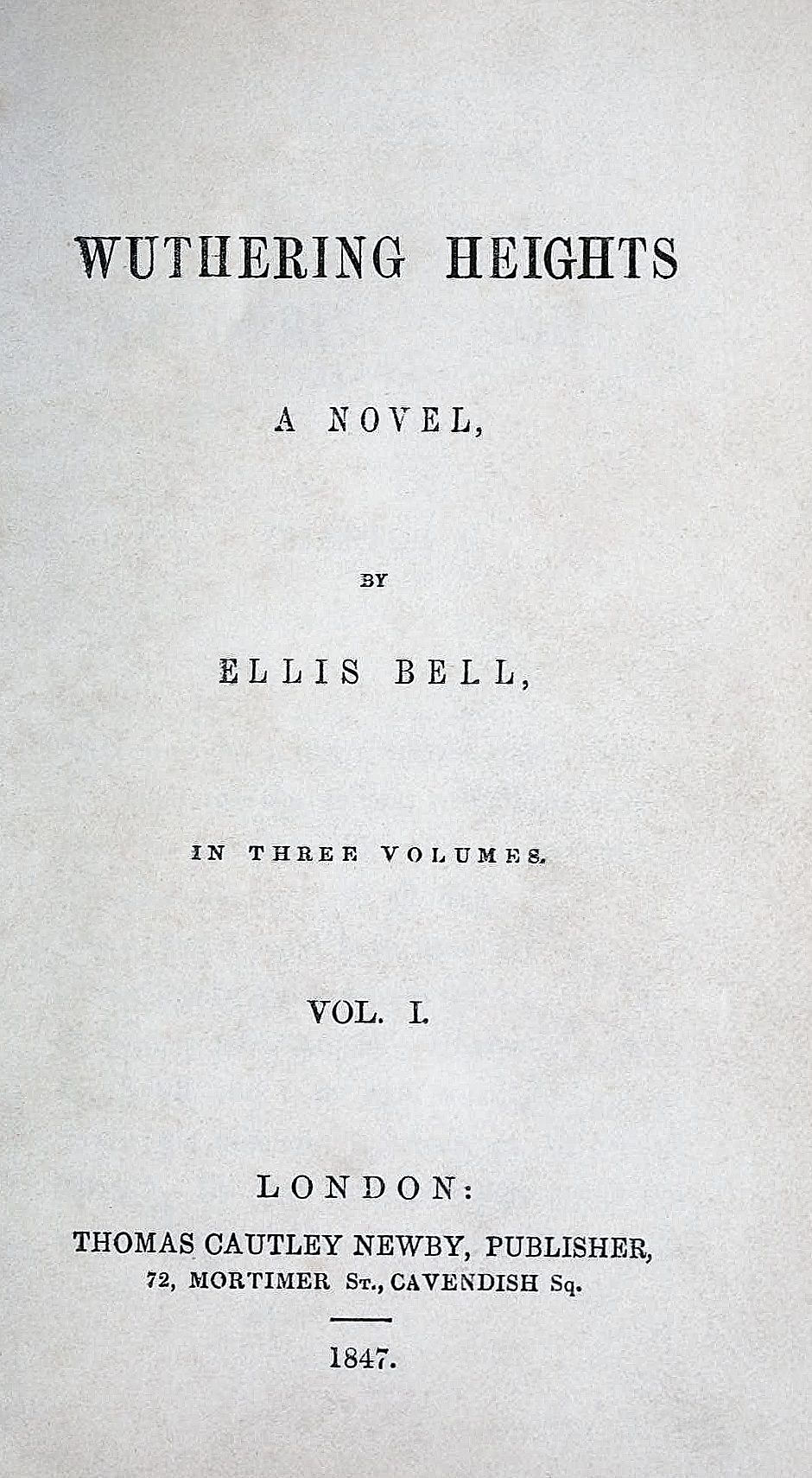
Wuthering Heights, 1847
Source: Wikipedia
The tone of these passages may surprise you—this is biography, remember, not fiction. But Gaskell’s biography is as lyrical and dramatic as any novel, and the more seasoned Brontë readers among you may well have been struck by something familiar.

Do you remember Lockwood’s dream from the opening section of Emily Brontë’s Wuthering Heights? Do you remember Heathcliff’s reaction to this dream?

I was lying in the oak closet, and I heard distinctly the gusty wind, and the driving of the snow; I heard, also, the fir bough repeat its teasing sound, and ascribed it to the right cause: but it annoyed me so much, that I resolved to silence it, if possible; and, I thought, I rose and endeavoured to unhasp the casement. The hook was soldered into the staple: a circumstance observed by me when awake, but forgotten. ‘I must stop it, nevertheless!’ I muttered, knocking my knuckles through the glass, and stretching an arm out to seize the importunate branch; instead of which, my fingers closed on the fingers of a little, ice-cold hand! The intense horror of nightmare came over me: I tried to draw back my arm, but the hand clung to it, and a most melancholy voice sobbed, ‘Let me in—let me in!’ ‘Who are you?’ I asked, struggling, meanwhile, to disengage myself. ‘Catherine Linton,’ it replied, shiveringly […] ‘I’m come home: I’d lost my way on the moor!’ (20) 

[Heathcliff] got on to the bed, and wrenched open the lattice, bursting, as he pulled at it, into an uncontrollable passion of tears. ‘Come in! come in!’ he sobbed. ‘Cathy, do come. Oh, do—once more! Oh! my heart’s darling! hear me this time—Catherine, at last!’ The spectre showed a spectre’s ordinary caprice: it gave no sign of being; but the snow and wind whirled wildly through, even reaching my station, and blowing out the light. (24) 
Emily Bronte, Wuthering Heights, ed. by Ian Jack (Oxford: Oxford University Press, 2009)

Gaskell transforms Charlotte Brontë’s act of pacing—and thus her continued attempts to write—into a ghostly haunting, employing a direct and explicit (yet unnamed, unspoken) allusion to her dead sister’s only novel. Thus she blurs the dividing line between life narrative and fiction. The biography appropriates the energy and fantasy of Emily’s novel, and strange moments like this punctuate Gaskell’s text. They typically deal with Brontë as a writer, whereas realist narratives are used to depict Brontë as a ‘proper’ woman. Here, therefore, the ghostly allusion to Wuthering Heights serves to displace Brontë’s act of writing, making it somehow ‘unreal’, strange and supernatural.

The allusiveness of Gaskell’s biography, its use and borrowing from a range of texts (declared or otherwise), reveals the permeable nature of genres and the artificiality of separate traditions where fiction and non-fiction are rendered asunder.

Tuesday, October 18, 2011

Looking Glasses At Odd Corners

Source: Wikipedia
The title of this, my new blog, is taken from Virginia Woolf's essay, 'The Art of Biography'. She argues that modern day biographers, living in a world of fast communications and new media, must be prepared to experiment -- must be prepared to hang 'looking glasses at odd corners', to 'admit contradictory versions of the same face.'

Woolf was writing in 1939 -- a time when photography, telephones, radio and cinema were changing the way we perceived our selves, our lives and our relations with others (not to mention the epoch-making war that loomed around the corner). But how contemporary these words sound? How relevant to us today? New technologies, such as social media and immersive online environments, have revolutionised the way we present and represent our lives, our selves. Can the voice and identity I adopt on Twitter (@AmberRegis) be called authentic? What about the voice and identity I adopt here as I blog? If the medium is the message (to repeat Marshall McLuhan's well-worn phrase), how do such forums shape the way I turn my life into a story? 

Questions such as these intrigue me, but they cannot be limited to our 20th and 21st-century modernity. As such, my eyes as a researcher are often cast backwards. I spend my days with Victorian life writing -- with biographies and autobiographies from the long 19th century. Such works have a bad reputation. In the same essay quoted above, Woolf compares Victorian biography to the wax figures carried in funeral processions, baring only 'a smooth superficial likeness to the body in the coffin.' Victorian autobiographies and biographies alike share in this tainted view: they are seen to be long, prosaic, preachy, censored, dull. Much is the fault of the modernists. The critical views of Woolf and her contemporaries -- particularly those of Lytton Strachey in his Preface to Eminent Victorians (1918) -- have stuck, have been oft-repeated, and have become a truism. But surely Victorian life writing was just as concerned with questions of how we craft a life in language? Just as concerned to try out new ideas and explore new forms? Just as concerned to hang looking glasses at odd corners? As 21st-century readers, we might not warm to the answers they give, but we must not dismiss them.

For my part, I am intrigued by the Victorian/modern divide, and I enjoy looking for continuities as well as breaks. What form(s) do life narratives take? How do genres and media blend and borrow from each other? To what use(s) are life narratives put? My blog will explore these issues. I will try out new ideas. I will discuss things that interest me (and hopefully you, dear reader). It will be a life narrative of my very own, filled with the books I read, the events I attend, and the musings I have.