Showing posts with label Virginia Woolf. Show all posts

Wednesday, June 6, 2012

Book Chapter: Contradictory Woolf

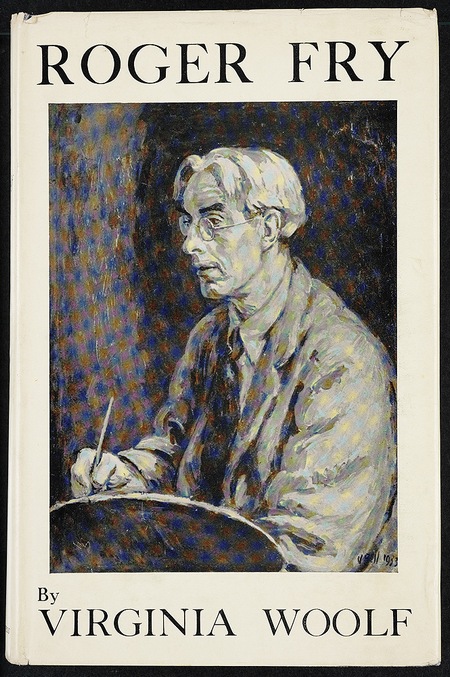
Just a quick post to announce the publication of my book chapter on Virginia Woolf’s Roger Fry (1940), the Omega Workshops and her contradictory theorising of biography:

‘"But something betwixt and between": Roger Fry and the contradictions of biography’, in Contradictory Woolf, ed. by Derek Ryan and Stella Bolaki (Clemson: Clemson University Digital Press, 2012), pp. 82-7

This chapter forms part of an edited collection emerging from the 21st Annual International Conference on Virginia Woolf, held at the University of Glasgow in June 2011. Print copies are available to order, but I’m very happy to see the online version is open access. [The series back catalogue is also available online, and I have a chapter on Orlando (1928) and the ‘limits’ of biographical representation in Woolfian Boundaries (2007).]

Although the paper evolved during the writing process, becoming increasingly concerned with the relationship between Woolf's theories of biography and Fry's theories of art and craft, I thought I would whet your appetite with a glimpse of my original abstract:
"But something betwixt and between": Roger Fry and the contradictions of biography
He chooses; he synthesises; in short, he has ceased to be the chronicler; he has become an artist. (‘The New Biography’, 1927)
And thus we come to the conclusion, that he is a craftsman, not an artist; and his work is not a work of art, but something betwixt and between. (‘The Art of Biography’, 1939) 
Virginia Woolf’s Roger Fry (1940) remains the black sheep of the Woolfian canon. No critical edition is currently in print. It is conspicuously absent from the Penguin and Oxford ‘Classics’ lists, and though Vintage reproduces the text as part of its ‘Lives’ series, there is no scholarly introduction or editorial apparatus. It seems that Roger (to appropriate Woolf’s nickname for the work) has a bad reputation. This is due, in large part, to Woolf’s own response. In her diaries and letters, Roger becomes ‘donkey work & […] sober drudgery’, or nothing more than ‘a piece of cabinet making’. But it is the connection between Roger and ‘The Art of Biography’ that strikes the fatal blow.
This paper will explore Woolf’s contradictory theorising of biography, from the optimism of ‘The New Biography’ to the seeming retractions of ‘The Art of Biography’. Woolf bestows and then strips biography of its claim to art, with the result that Roger (contemporaneous with ‘The Art of Biography’) has been read as an embodiment of its conservative aesthetic. I will argue, however, that Woolf’s later writing on biography, far from enacting a volte face, serves to develop and adapt her earlier position. As such, I will offer a reassessment of Roger, using its method and practice to demonstrate an ongoing Woolfian experiment. In Roger, as in her earlier biographical works, Woolf exploits the productiveness of paradox and contradiction—that ‘something betwixt and between’ at the heart of ‘The Art of Biography’.

Monday, January 30, 2012

Virginia Woolf Birthday Lecture, 28 January 2012

Virginia Woolf (photographed in 1902)
by George Charles Beresford
Source: Wikipedia
Last Saturday I travelled down to London for the annual Virginia Woolf birthday lecture organised by the Virginia Woolf Society of Great Britain. Fittingly, the event was held in the Keynes Library at 43 Gordon Square, complete with Vanessa Bell paintings looking down upon the audience from the rather grand walls. There was birthday cake and champagne, and a fascinating lecture by Michael Whitworth on the topic of ‘Virginia Woolf, Fame and Gloire’.

Whitworth traced the nuances of fame, reputation and ‘afterlives’ as debated and explored in Woolf’s fiction, essays and her correspondence with Logan Pearsall Smith. Ranging from Night and Day to Between the Acts -- and taking in Jacob’s Room, To The Lighthouse and Orlando along the way -- Whitworth teased out the multiple meanings of fame and longevity in Woolf’s work. What is the relationship between the celebrity of an author and the value of a text? Is fame to be measured in terms of money, revenue and sales? Or is it the product of genius and the result of a lasting work of art? And where is the book as physical object in all this? What is the relationship, if any, between the preservation of pages and bindings, and preservation of a writers’ reputation?

An extended version of Whitworth’s lecture will soon be published and available to buy from the VWSGB, and I look forward to getting my hands on a copy. As a life-writing researcher, I was intrigued by the questions raised and Whitworth’s exploration of the relationship between authors (or author figures in fiction) and texts, between authors and books. For Whitworth, Logan Pearsall Smith -- with whom Woolf debated the issue of fame, defending modern writers against accusations of debased chasing after money -- provided the model for Nick Greene in Orlando (revising a critical tradition that would have Edmund Gosse as the template for this character). As readers, we are invited to suspect Nick Greene and his championing of ‘gloire’; he is vulgar, grotesque and his views seem detached from the realities of the writing and book trade, from the vitality of writing as it is practised now, with his head stuck firmly in the past. But the reference to Nick Greene set my mind to thinking about a different aspect of fame, reputation and ‘afterlives’…

Virginia Woolf, Roger Fry: A Biography (1940)
Source: www.mantex.co.uk
Nick Greene writes a satire of his patron Orlando; as such, the ‘gloire’ of his poem depends on the cannibalised reputation of another. Orlando as a novel is a mock-biography of Vita Sackville-West and much of its humour and playfulness depends on the reputation (and infamy) of its subject. While Woolf was writing Between the Acts and exploring the lastingness -- or rather, the “scraps, orts, and fragments” [1] -- of a work of art, she was also writing her life of Roger Fry, a book that would cause much difficulty in the writing, not least because of the responsibility she felt to friends and family to ‘capture’ Roger, yet also to preserve and protect his reputation. When dealing with his affair with her sister, Vanessa Bell, Woolf exclaimed: “What am I to say about you? […] Do give me some views; how to deal with love so that we’re not all blushing” [2].

In the case of Roger Fry, the fame and reputation of the biographer was intimately tied to, and responsible for, the fame and reputation of the biographical subject. It is striking, therefore, that Roger Fry is the most forgotten, most neglected of Woolf’s major works; it enjoys the least fame and the most doubted, the most questioned reputation. (It is, however, a fascinating biography offering a sensitive and experimental account of Fry’s life -- but this is an argument for another day.)

Literary biography is a pertinent genre for an exploration of fame and longevity: of text, of subject, of biographer. And thus, when the published version of Whitworth’s lecture arrives through my letterbox, I’ll be keen to see how its arguments relate to Woolf’s career-long interest in the writing of lives.

[1] Virginia Woolf, Between the Acts, ed. by Frank Kermode (Oxford: Oxford University Press, 2008), p. 169.

[2] Virginia Woolf to Vanessa Bell, 8 October 1938. Leave The Letters Till We’re Dead. The Letters of Virginia Woolf, Volume Six: 1936-1941, ed. by Nigel Nicolson and Joanne Trautmann (London: The Hogarth Press, 1980, p. 285.

Monday, December 12, 2011

Celebrity Memoirs I: A Tale of Literary Snobbishness?

Certain news stories recur with amusing frequency, and Christmas is a ripe time for Lazarus-like reappearances. Worried by spectres of debt, each year we are warned of the dangers of overusing our credit cards. And yet, at the same time, we hear of the high street’s woes, the waning foot-fall and revenues, and the inevitable early start of the ‘January’ sales. Life-writing too has its annual cycle, and at Christmas the book-charts are seemingly overrun by celebrity memoirs.

Much-loved yet much-maligned, ‘sleb’ tomes appear on the shelves in September and October each year, eyes (and marketing campaigns) set firmly on their hoped-for destinations: in our Christmas stockings, under our Christmas trees. And yet, ever since the economic downturn hit in 2008 -- since the credit well and truly began to crunch -- news reports have announced (and celebrated) the death of celebrity life-writing. Let’s take The Times as our example…

In 2008, the paper reported that “cash-strapped consumers [were] tiring of reading about celebrity lifestyles” -- indeed, “celebrity autobiographies” were at “the weakest end” of a struggling market. A year later, and in gleeful tone, The Times confidently remarked that “the decline of celebrity memoir comes as no great surprise.” In 2010 there was a new spin on this favourite story: the runaway success of Aleksandr Orlov’s A Simples Life (yes, that’s right, the meerkat from the comparethemarket.com adverts) was the cause of much hilarity, not least because it beat new memoirs by Stephen Fry and Paul O’Grady to the top of The Sunday Times non-fiction bestseller list. But what about this year? In yesterday’s Biteback column, Richard Brooks declared that celebrity memoirs were “staying stubbornly on the bookshop shelves.” He suggested we might finally be bored with celebrity culture, bored with “reading about the banal and the bleeding obvious.”

But what story do sales figures tell? 2006 was a bumper year for celebrity memoir, in large part due to the runaway success of Peter Kay’s The Sound of Laughter (582, 446 copies sold by Christmas, and continuing to sell well in 2007). Sales peaked in 2008 when the triumvirate of Dawn French, Paul O’Grady and Julie Walters dominated the charts. Since then, sales have declined but there has been no dramatic slump comparable to the tenacious rhetoric employed by the Times. (Forecast figures in the Guardian, however, suggest there will indeed be a noticeable drop in 2011 sales).

In a recent piece for the Guardian, Richard Lea considers why celebrity memoirs might be “[losing] star power at the tills” (yes, that’s right, this recurring story is not a Times exclusive, but the Guardian takes a different tack -- more on this anon). Lea interviews Jonathan Ruppin (of Foyles Bookshop) and his comments are singularly telling. Ruppin views current bestseller I, Partridge: We Need to Talk About Alan (Steve Coogan’s fictional mock-autobiography of his best-known character, and spoof of the celebrity genre), as a death-knell, a sign that “[c]elebrity memoir is fading fast.” He also blames falling sales on “buyer-fatigue”: “There’s a limit to how many Christmasses in a row you can buy someone a celebrity autobiography without looking like you’re not really putting much effort in.”


“It’s the best book I’ve ever written and one of the best books I’ve ever read. It’s not Hilary Mantel, it’s not Simon Schama, it’s not Andrew McNab. It’s all of those, yet it’s none of them...yet all of them.” -- Alan Partridge on I, Partridge

**

There are two points I’d like to address: 1) I, Partridge (and mock life-writing in general) as outrider of the apocalypse for celebrity memoir, and 2) the lavish overtone of literary snobbishness that tends to colour news reporting on celebrity memoir.

Source:
Smith College Libraries
I, Partridge follows in a long and esteemed line of mock life-writing. Virginia Woolf, for example, lampooned literary traditions of biography (particularly the ‘two fat volumes’ of Victorian biography, to borrow Lytton Strachey’s phrase) in Orlando (1928), before moving on to write the life of Elizabeth Barrett Browning’s pet cocker spaniel in Flush (1933). Elsewhere and earlier, George and Weedon Grossmith lampooned middle-class pomposity and self-importance (‘Pooterish-ness’) in their mock-autobiographical Diary of a Nobody (serialised in Punch between 1888-9). These texts are all subversive; they play with our expectations of genre and they expose or challenge social behaviours and norms. Coogan’s text is no different, and his ‘Pooterish’ Partridge fits neatly in the tradition of the Grossmith brothers. Coogan’s text also tells us something about the formulaic structures and plotting of much celebrity memoir, just as Woolf exposed the pruderies and omissions of Victorian biographical practice. And yet, a healthy dose of satire has never killed off a genre. Rather, it reinvigorates and reinvents.

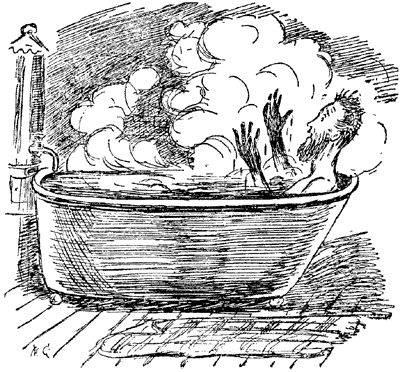
Pooter paints the bath
Diary of a Nobody 
Orlando, Flush, and Diary of a Nobody. All three enjoy canonical status; they are welcomed with open arms by literary and academic audiences and they are blessed with scholarly editions on publishers’ lists. But I, Partridge, though enjoying popular success, has been met with critical suspicion. This treatment is representative of general trends, in which celebrity memoirs -- in an age too close to enjoy the benefits of hindsight -- are widely ridiculed and derided. What lies behind Richard Brooks’ conflation of celebrity memoir with the “banal and bleeding obvious” (above)? What sentiment informs Erica Wagner’s belief that a “silver lining” of the recession has been the declining sales of “volumes [and yes, he is talking about celebrity memoirs] that some would barely classify as ‘books’.” And why, might we ask, is the apparent decline in “serious biography” blamed on the rise of “vapid celebrity memoirs […] flooding the market”? These reports, reviews and headlines (and again, these examples have been taken from The Times and Sunday Times) are awash with snobbery.

Celebrity memoirs are bad; they are not literature. This has become a critical truism. But more sensitive portrayals do exist. In his piece for the Guardian, Richard Lea balances the view of Jonathan Ruppin with soundbites taken from an interview with Alan Samson (from Weidenfield & Nicolson publishers). Rather than duplicate the dominant rhetoric of a race to the bottom in terms of gossip and vulgar revelation, Samson argues that increasing numbers of celebrity memoirs have produced a comparable rise in quality: “A really good celebrity book today is much better than it used to be -- better written, better structured and much more honest. Showbiz memoirs used to be just a bunch of anecdotes strung together which gave nothing away, but now they really tell the story of a life.” In a saturated market, it seems, your book has to be good to stand out. Mark Lawson has also been sympathetic in his view of the genre. Again, writing in the Guardian, he applauds the rise in “gently confessional”, self-penned celebrity memoirs. These too have produced a rise in quality: they “[contain] more essence of the person than the soulless airline-magazine tones that ghostwriters tend to apply to the tapes they transcribe.”

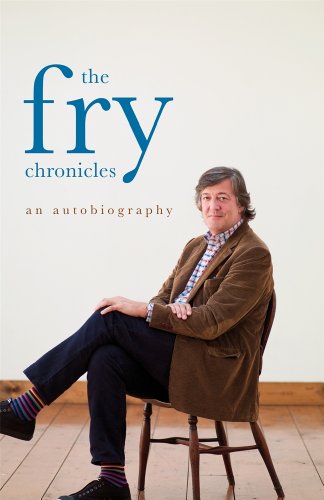
Inspired by these glimmers of hope, I determined to go out in search of celebrity memoirs, to read them for myself and to judge them for myself. The fact I have never read any in the past suggests my complicity with the snobbishness on display in the newspaper articles above. And yes, when faced with the rows of memoirs in an Oxfam bookshop, there were certain titles I could not bring myself to buy -- these included books by Chris Moyles and Katie Price. But I managed to choose three titles: Stephen Fry’s The Fry Chronicles, Dawn French’s Dear Fatty and Rupert Everett’s Red Carpets and Other Banana Skins.

Of the three, Dear Fatty has caught my attention and interest. But will my reaction be derision (in the style of The Times), sympathy (in the style of the Guardian) or (gasp!) could it be praise? Dear reader, you’ll just have to wait and see (until my next blog post that is...).

Tuesday, October 18, 2011

Looking Glasses At Odd Corners

Source: Wikipedia
The title of this, my new blog, is taken from Virginia Woolf's essay, 'The Art of Biography'. She argues that modern day biographers, living in a world of fast communications and new media, must be prepared to experiment -- must be prepared to hang 'looking glasses at odd corners', to 'admit contradictory versions of the same face.'

Woolf was writing in 1939 -- a time when photography, telephones, radio and cinema were changing the way we perceived our selves, our lives and our relations with others (not to mention the epoch-making war that loomed around the corner). But how contemporary these words sound? How relevant to us today? New technologies, such as social media and immersive online environments, have revolutionised the way we present and represent our lives, our selves. Can the voice and identity I adopt on Twitter (@AmberRegis) be called authentic? What about the voice and identity I adopt here as I blog? If the medium is the message (to repeat Marshall McLuhan's well-worn phrase), how do such forums shape the way I turn my life into a story? 

Questions such as these intrigue me, but they cannot be limited to our 20th and 21st-century modernity. As such, my eyes as a researcher are often cast backwards. I spend my days with Victorian life writing -- with biographies and autobiographies from the long 19th century. Such works have a bad reputation. In the same essay quoted above, Woolf compares Victorian biography to the wax figures carried in funeral processions, baring only 'a smooth superficial likeness to the body in the coffin.' Victorian autobiographies and biographies alike share in this tainted view: they are seen to be long, prosaic, preachy, censored, dull. Much is the fault of the modernists. The critical views of Woolf and her contemporaries -- particularly those of Lytton Strachey in his Preface to Eminent Victorians (1918) -- have stuck, have been oft-repeated, and have become a truism. But surely Victorian life writing was just as concerned with questions of how we craft a life in language? Just as concerned to try out new ideas and explore new forms? Just as concerned to hang looking glasses at odd corners? As 21st-century readers, we might not warm to the answers they give, but we must not dismiss them.

For my part, I am intrigued by the Victorian/modern divide, and I enjoy looking for continuities as well as breaks. What form(s) do life narratives take? How do genres and media blend and borrow from each other? To what use(s) are life narratives put? My blog will explore these issues. I will try out new ideas. I will discuss things that interest me (and hopefully you, dear reader). It will be a life narrative of my very own, filled with the books I read, the events I attend, and the musings I have.