Showing posts with label autobiography. Show all posts

Saturday, April 7, 2012

Review Essay on Victorian Life-Writing (JVC 17.1)

A quick post to announce the publication of my review essay on recent studies of Victorian life-writing in the Journal of Victorian Culture.


Both are ambitious and important studies. They help to redress a long-standing critical tradition that 'jumps over' the nineteenth century when constructing an account of innovation, dismissing the Victorian period as a time of reactionary conservatism in the writing of lives. These works are highly recommended!


Wednesday, January 18, 2012

On Blogging and Being Busy

Little Crackers
Source: Sky 1
Regular visitors to the blog will no doubt have realised this is not the long awaited third instalment of my series on celebrity memoir. Be assured this post is on its way and will feature a discussion of Little Crackers, a series of mini celebrity biopics aired on Sky 1 over Christmas.

But in my first post, I described this blog as ‘a life narrative of my very own’. And so, it only seems appropriate that I interject a brief, autobiographical account of what I’ve been up to, the projects I have on the go, and how these relate not only to life narrative, but also to the act of blogging.

What’s the phrase? We apologise for the disruption, normal blogging services will be resumed as soon as possible. But why the disruption? In brief, I’ve been busy. January has brought with it the beginning of a new semester and an increased teaching load. But there is much to look forward to, and two of the modules I am teaching will involve the study of life narratives. (Life writing continues to be under-represented on university syllabi, most often limited to specialist modules, read in isolation, and only rarely alongside other texts and genres.)

An Account of the Trial Execution and
Dying Behaviour of Henry Fauntleroy (1824)
Source: Criminal Broadsides Project
Harvard Law School Library
In Prison Voices at LJMU I will be making use of eighteenth- and nineteenth-century criminal broadsides (many courtesy of the Old Bailey Online). Published and sold to accompany public executions, these pamphlets contain the fictive, “ventriloquised” confessions and laments of criminals -- a macabre souvenir of the day.

I will also be teaching a survey course for the Open University on The Arts Past and Present (AA100). The module ranges across disciplines, from philosophy to music, religion to architecture, literature to film. The course is arranged into four thematic books, the first of which is titled Reputations. This book investigates the concept of fame (and infamy) and how the biographical/historical record shifts and changes, how lives are constructed and reconstructed, how reputations wax and wane, ebb and flow.

This has been a topic of interest in my own work, and last year I published an article exploring competing accounts of Vita Sackville-West’s life and how her sexuality has been subject to successive concealments and revelations. It will be a treat to return to these issues, to investigate new and different case studies (and these will include Cleopatra, Stalin and the Dalai Lama).

I’ve also had a few exciting commissions in recent weeks. I’ve been invited to become a guest blogger at JVC Online (the virtual counterpart to the academic journal, Journal of Victorian Culture). So keep a look out for link ups and re-posts between this blog and JVC Online!

I’ve also been invited to write a short article on blogging and Twitter in the field of Victorian Studies. Now this may raise a few eyebrows. Academics have a reputation for resembling their research and many terrible stereotypes result: historians are as dusty as archives; artists are bohemian; mathematicians are bespectacled and methodical. From the outside looking in, therefore, Victorian Studies might not seem particularly fertile ground – surely we’d all be happier communicating via the telegraph and through letters with a penny black stamp? Well, you might be surprised. There are so many interesting Victorian bloggers and tweeters, and the field of Victorian Studies has produced a vast and diverse array of digital projects, such as the Nineteenth-Century Serials Edition, the Database of Mid-Victorian Wood-Engraved Illustration, and Charles Darwin Online (to name but a very few).

As I set out on my adventures through the Victorian Studies blogosphere, look out for posts and tweets asking for your opinions and input. To what uses are blogs and Twitter put in the field of Victorian Studies? Do users represent a distinct demographic? Are they PhD students and early career academics? Are they on the receiving end of bemused looks and skepticism from more senior (and older) colleagues? Or, is this an unfair distinction? What identities are adopted and performed by Victorian Studies academic and enthusiasts in the blogosphere and on Twitter? I’ll be considering all of these questions in the coming weeks, so get your thinking caps on!

Thank you for your patience; normal blogging services will now resume…

Wednesday, December 21, 2011

Celebrity Memoir II: Dear Fatty

Last week I blogged about the Christmas trade in celebrity memoir, and by coincidence or serendipity, last Friday’s Guardian Books podcast contained a segment on the genre. In it, Claire Armitstead interviews John Harris, a Guardian writer whose recent article in the G2 pitted ‘sleb tome against ‘sleb tome, seeking (with tongue in cheek) the ultimate celebrity memoir. Harris is asked (in a somewhat leading fashion) whether the quality of these works is responsible for their falling sales; he replies in a familiar strain: “I would like to think, having now read close to twenty of these things, that […] the penny is starting to drop with the reading public and they’re realising, by and large, what an awful, awful thing these are and therefore stepping away.’

So much for the sympathetic stance of the Guardian described in my last post. But are they really ‘awful, awful’ things? And will reading them really drive you mad (as Harris claims earlier in the podcast)? I have already suggested that the press coverage ‘enjoyed’ by celebrity memoir, with its refusal to recognise the legitimacy of the form, is steeped in literary snobbishness. But might this stance be justified? To answer these questions, I’ve had to delve beneath the (celebrity memoir) covers…

This last week I’ve been casting an eye over Dawn French’s bestselling 2008 memoir, Dear Fatty. In terms of viewing celebrity memoir as a Christmas trade -- as a cynical, money-making collusion between ‘star’ and publisher -- this title seems to fit the bill and adhere to stereotypes. In April 2007, The Sunday Times reported that a bidding war had broken out, with publishers fighting over French’s then unwritten memoir. A week later, it reported that £2 million had been paid, with Century (part of Random House) winning the battle. Dear Fatty was also a popular success, selling more than 344, 857 copies by 6 December 2008 -- something sure to raise the hackles and suspicions of the literary establishment.

I freely confess to being surprised by Dear Fatty. First of all, it demonstrates a sophisticated awareness of genre, its limits and traditions. French resists the linear, Bildungsroman plot of much autobiography, and rejects this as a label for her work: “I have decided to think of this book as a memoir rather than an autobiography” (ix). Now, “memoir” is the term most commonly applied to celebrity works -- and it is also the description I have used, for the sake of clarity. However, one suspects that memoir is often applied in a derogatory sense, suggesting an inability to reach and attain the dizzy heights of autobiographical aesthetic unity and coherence. But French embraces the fragmentary, the disruptions to chronology, the biases associated with memoir. Rather than tell her story in a logical, ordered fashion, she will focus instead “on those memories that are especially important or vivid to me. The parts of my life I can still remember the taste and feel and smell of” (ix) [1].

These stand-out moments, encounters and events are narrated, not in flowing retrospective prose, but in a series of letters to various significant others: mother, dead father, brother, niece, daughter, old boyfriends, Jennifer Saunders, Lenny Henry, etc. Each letter assumes a different audience, and thus necessitates a different performance -- a different epistolary self (to borrow a phrase from life-writing theory). Letters to the absent father, who committed suicide when French was just nineteen, strike a plaintive, melancholic note without recourse to cloying sentiment or indulgent prose. Letters to ‘Fatty’ (French’s nickname for Saunders and a playful sleight of hand undermining reader’s expectations, the common assumption that ‘Fatty’ is French herself), by contrast, adopt an intimate and confessional tone, something akin to a (jocular) therapist’s couch. Interrupting this succession of relational selves, where each addressee shapes the autobiographical subject, is the occasional comic letter, including several to Madonna (who never agreed to appear io a French and Saunders show), fan-mail to David Cassidy and the Monkees, and an application form “to become a lifelong friend and loyal admirer of Liza Tarbuck” (205). As a reader, I felt these moments jarred; they seemed contrived, a forced attempt to reintroduce French’s public, comic persona. But again, they demonstrate a controlled playing with genre: the blurring of fact and fiction, injecting moments of levity and displacing the act of self-representation. These comic set pieces enable a pause for breath before the next letter, the next addressee and the next “important or vivid” moment.

One further surprise was the understated revelation of Dear Fatty. Where press coverage of celebrity memoir had led me to expect a voyeuristic reading experience -- replete with showbiz gossip, family secrets and ‘kiss and tell’ -- I found instead a tempered reticence. As one might suspect, letters to French’s father are raw and emotive, frequently returning to the subject of his early death and long absence. But they do not dwell or revel in the details of his suicide. When French tackles the subject, about half way through the book, her account breaks down; it fractures into questions, thus rescuing her from the task of narrating the act. But while attention is diverted onto the impact and aftermath, frightening glimpses remain: “Did you weep? Did we cross your mind? […] Did you pray that someone would knock on the car window at the very last moment and drag you out?” (216). As such, the memoir exercises a restrained exposure, a delicate balancing act between private hurts, intimate experience, and the public narration of a public persona. It follows that readers hoping for a behind-closed-doors exposé of French’s marriage to Lenny Henry and his rumoured infidelities will be disappointed. She begins her letter to “Len” with a reassuring guarantee -- “Obviously there are things I can’t and won’t write about in these pages” (303) – and continues to describe, with no exact details, the time their relationship was “buffeted by a tornado” (309). The villain of the piece is the British press, those who “dump their buckets of sleaze and schadenfreude” (309), and not “Len”. No exposé, no retribution, no ‘cheat and tell’.

Contra John Harris and the G2, reading Dear Fatty did not drive me mad. I enjoyed its jumps in chronology, its collage of vivid memories and adoption of multiple voices. While it would be naïve to claim Dear Fatty as  representative of celebrity memoir as a whole, it certainly suggests the diverse range of textual practice lurking behind that now-derogatory label. And is celebrity memoir truly on the wane? While sales this year are undeniably down, I suspect they’ll be hitting our shelves with undiminished vigour next year. While there is potential to play, to challenge and experiment – evidenced by Dear Fatty, and I, Partridge in my last post – there is potential for more celebrity memoir.

[1] Dawn French [2008], Dear Fatty (London: Arrow, 2009). All further references are to this edition.

Monday, December 12, 2011

Celebrity Memoirs I: A Tale of Literary Snobbishness?

Certain news stories recur with amusing frequency, and Christmas is a ripe time for Lazarus-like reappearances. Worried by spectres of debt, each year we are warned of the dangers of overusing our credit cards. And yet, at the same time, we hear of the high street’s woes, the waning foot-fall and revenues, and the inevitable early start of the ‘January’ sales. Life-writing too has its annual cycle, and at Christmas the book-charts are seemingly overrun by celebrity memoirs.

Much-loved yet much-maligned, ‘sleb’ tomes appear on the shelves in September and October each year, eyes (and marketing campaigns) set firmly on their hoped-for destinations: in our Christmas stockings, under our Christmas trees. And yet, ever since the economic downturn hit in 2008 -- since the credit well and truly began to crunch -- news reports have announced (and celebrated) the death of celebrity life-writing. Let’s take The Times as our example…

In 2008, the paper reported that “cash-strapped consumers [were] tiring of reading about celebrity lifestyles” -- indeed, “celebrity autobiographies” were at “the weakest end” of a struggling market. A year later, and in gleeful tone, The Times confidently remarked that “the decline of celebrity memoir comes as no great surprise.” In 2010 there was a new spin on this favourite story: the runaway success of Aleksandr Orlov’s A Simples Life (yes, that’s right, the meerkat from the comparethemarket.com adverts) was the cause of much hilarity, not least because it beat new memoirs by Stephen Fry and Paul O’Grady to the top of The Sunday Times non-fiction bestseller list. But what about this year? In yesterday’s Biteback column, Richard Brooks declared that celebrity memoirs were “staying stubbornly on the bookshop shelves.” He suggested we might finally be bored with celebrity culture, bored with “reading about the banal and the bleeding obvious.”

But what story do sales figures tell? 2006 was a bumper year for celebrity memoir, in large part due to the runaway success of Peter Kay’s The Sound of Laughter (582, 446 copies sold by Christmas, and continuing to sell well in 2007). Sales peaked in 2008 when the triumvirate of Dawn French, Paul O’Grady and Julie Walters dominated the charts. Since then, sales have declined but there has been no dramatic slump comparable to the tenacious rhetoric employed by the Times. (Forecast figures in the Guardian, however, suggest there will indeed be a noticeable drop in 2011 sales).

In a recent piece for the Guardian, Richard Lea considers why celebrity memoirs might be “[losing] star power at the tills” (yes, that’s right, this recurring story is not a Times exclusive, but the Guardian takes a different tack -- more on this anon). Lea interviews Jonathan Ruppin (of Foyles Bookshop) and his comments are singularly telling. Ruppin views current bestseller I, Partridge: We Need to Talk About Alan (Steve Coogan’s fictional mock-autobiography of his best-known character, and spoof of the celebrity genre), as a death-knell, a sign that “[c]elebrity memoir is fading fast.” He also blames falling sales on “buyer-fatigue”: “There’s a limit to how many Christmasses in a row you can buy someone a celebrity autobiography without looking like you’re not really putting much effort in.”


“It’s the best book I’ve ever written and one of the best books I’ve ever read. It’s not Hilary Mantel, it’s not Simon Schama, it’s not Andrew McNab. It’s all of those, yet it’s none of them...yet all of them.” -- Alan Partridge on I, Partridge

**

There are two points I’d like to address: 1) I, Partridge (and mock life-writing in general) as outrider of the apocalypse for celebrity memoir, and 2) the lavish overtone of literary snobbishness that tends to colour news reporting on celebrity memoir.

Source:
Smith College Libraries
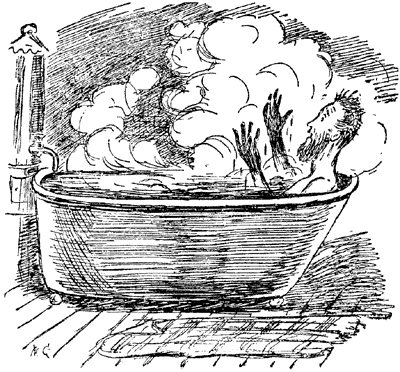
I, Partridge follows in a long and esteemed line of mock life-writing. Virginia Woolf, for example, lampooned literary traditions of biography (particularly the ‘two fat volumes’ of Victorian biography, to borrow Lytton Strachey’s phrase) in Orlando (1928), before moving on to write the life of Elizabeth Barrett Browning’s pet cocker spaniel in Flush (1933). Elsewhere and earlier, George and Weedon Grossmith lampooned middle-class pomposity and self-importance (‘Pooterish-ness’) in their mock-autobiographical Diary of a Nobody (serialised in Punch between 1888-9). These texts are all subversive; they play with our expectations of genre and they expose or challenge social behaviours and norms. Coogan’s text is no different, and his ‘Pooterish’ Partridge fits neatly in the tradition of the Grossmith brothers. Coogan’s text also tells us something about the formulaic structures and plotting of much celebrity memoir, just as Woolf exposed the pruderies and omissions of Victorian biographical practice. And yet, a healthy dose of satire has never killed off a genre. Rather, it reinvigorates and reinvents.

Pooter paints the bath
Diary of a Nobody 
Orlando, Flush, and Diary of a Nobody. All three enjoy canonical status; they are welcomed with open arms by literary and academic audiences and they are blessed with scholarly editions on publishers’ lists. But I, Partridge, though enjoying popular success, has been met with critical suspicion. This treatment is representative of general trends, in which celebrity memoirs -- in an age too close to enjoy the benefits of hindsight -- are widely ridiculed and derided. What lies behind Richard Brooks’ conflation of celebrity memoir with the “banal and bleeding obvious” (above)? What sentiment informs Erica Wagner’s belief that a “silver lining” of the recession has been the declining sales of “volumes [and yes, he is talking about celebrity memoirs] that some would barely classify as ‘books’.” And why, might we ask, is the apparent decline in “serious biography” blamed on the rise of “vapid celebrity memoirs […] flooding the market”? These reports, reviews and headlines (and again, these examples have been taken from The Times and Sunday Times) are awash with snobbery.

Celebrity memoirs are bad; they are not literature. This has become a critical truism. But more sensitive portrayals do exist. In his piece for the Guardian, Richard Lea balances the view of Jonathan Ruppin with soundbites taken from an interview with Alan Samson (from Weidenfield & Nicolson publishers). Rather than duplicate the dominant rhetoric of a race to the bottom in terms of gossip and vulgar revelation, Samson argues that increasing numbers of celebrity memoirs have produced a comparable rise in quality: “A really good celebrity book today is much better than it used to be -- better written, better structured and much more honest. Showbiz memoirs used to be just a bunch of anecdotes strung together which gave nothing away, but now they really tell the story of a life.” In a saturated market, it seems, your book has to be good to stand out. Mark Lawson has also been sympathetic in his view of the genre. Again, writing in the Guardian, he applauds the rise in “gently confessional”, self-penned celebrity memoirs. These too have produced a rise in quality: they “[contain] more essence of the person than the soulless airline-magazine tones that ghostwriters tend to apply to the tapes they transcribe.”

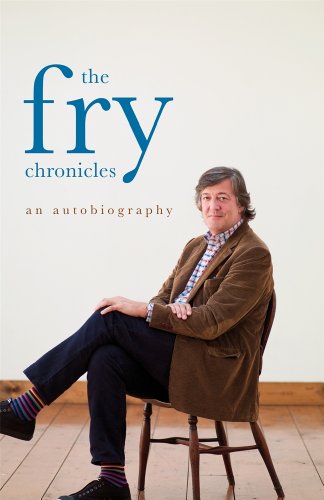
Inspired by these glimmers of hope, I determined to go out in search of celebrity memoirs, to read them for myself and to judge them for myself. The fact I have never read any in the past suggests my complicity with the snobbishness on display in the newspaper articles above. And yes, when faced with the rows of memoirs in an Oxfam bookshop, there were certain titles I could not bring myself to buy -- these included books by Chris Moyles and Katie Price. But I managed to choose three titles: Stephen Fry’s The Fry Chronicles, Dawn French’s Dear Fatty and Rupert Everett’s Red Carpets and Other Banana Skins.

Of the three, Dear Fatty has caught my attention and interest. But will my reaction be derision (in the style of The Times), sympathy (in the style of the Guardian) or (gasp!) could it be praise? Dear reader, you’ll just have to wait and see (until my next blog post that is...).

Friday, November 18, 2011

Life Narratives in the News

Source: Flickr (Creative Commons)
Lots of life narrative stories have caught my eye in the past week…

Offering some useful reflections on nonfiction (and 'creative nonfiction') and its relation to constructed selves/identities, Fassler reviews Jonathan Lethem’s new collection of essays, The Ecstasy of Influence (Doubleday, 2011) and conducts an author interview. Fassler traces the book’s attempt to ‘unpack the authorial “I”’—those ‘alternative selves’ selected and adopted by nonfiction writers: ‘[Lethem] sits across from the public version of himself, and watches as his influences surface and his previous incarnations flit across his face.’

Britain In A Day, 12 November 2011
I blogged about this project (and its ‘parent’ project, Life In A Day) last week. Timed to coincide with the event, the Radio Times commissioned a ‘typical Saturday’ diary from Sir Terry Pratchett. Filming is complete, and now the selection, editing and post-production begins. Britain In A Day will be in cinemas and on our TV screens next year.

Wolfson College, Oxford, launched its new Research Cluster—The Oxford Centre for Life-Writing—on 16 November with an inaugural lecture by Prof Michael Wood titled ‘All About his Mother: Reading Proust’s Letters’ (podcast also available). The Centre looks set to be an active and exciting hub for life-writing research understood in its broadest sense. Keep your eyes on their events and study opportunities!

Richard Norton-Taylor, ‘Mackenzie memoirs banned for spilling spy secrets to be republished’, The Guardian, 18 November 2011
An unexpurgated edition of Compton Mackenzie’s war memoir, Greek Memories, will be published next month by Biteback Books. Norton-Taylor explores the furore surrounding its first appearance in 1932 and its subsequent supression by MI5 and MI6 due to the revelation of intelligence secrets (such as the ‘C’ codename for the head of MI6). Autobiography and memoir can be dangerous genres…

This Our Still Life (dir. by Andrew Kötting), 18 November 2011
Collagistic documentary, filmed over twenty years, following the life of director Andrew Kötting and his daughter, Eden, who was born with a rare genetic disorder. An intimate portrait of this father and daughter’s life together, focused in particular on the still-life painting performed by Eden. See Peter Bradshaw’s review in The Guardian.

‘Authors breathe new life into forgotten portraits’, thisislondon.co.uk, 18 November 2011
Portraiture meets imagined life narrative at the NPG between December 2011 and June 2012. Contemporary authors—including Julian Fellowes and Terry Pratchett—have imagined lives and identities to accompany fourteen Tudor portraits. Tracy Chevalier’s contribution sounds particularly intriguing. She ‘queers’ the public art gallery; behind the portrait of ‘a blushing young man’, she imagines the life of ‘an object of homosexual desire’. You can read Alexander McCall Smith's story of 'Mary Peebles' in The Guardian, her life created to accompany a portrait once thought to depict Mary Queen of Scots.

Monday, October 31, 2011

Crossing Over

Source: Wikipedia
I was particularly struck by an article in this week's Times Higher Education: ‘Through the eyes of others (27 Oct–2 Nov 2011). It asked what the positives and pitfalls are of ‘crossing over’ as a life writer, of writing the life of a differently-gendered subject. Can a woman write the life of a man, and vice versa?

The article’s author, Matthew Reisz, surveyed the opinions of various biographers. Many argued for the neutrality of the biographer-subject relationship. For Frances Spalding, gender should present no obstacle: “the notion that certain subjects should be barred to certain people is abhorrent.” For Miranda Seymour, the biographer must adopt the imaginative stance of the fiction writer and “write about either sex with equal empathy and confidence.”

None of the biographers surveyed came out in favour of gender-limited subject choices -- none argued that women should stick to women, and that men should stick to men. Indeed, the benefits of ‘crossing over’ were vehemently defended. Rather than life-writing seeking to transcend the biases and perspectives of gender, to approach all subjects from a position of neutrality, Jane Ridley celebrated the insights afforded by gender difference. She rejected the notion that biographers must “unsex themselves”. Choosing instead to embrace and exploit the gender divide in her own work, emphasising the lives of women in male-dominated spheres and claiming a privileged, yet decidedly gendered view: “As a woman I am more detached, and I hope that I can combine sympathy with salty scepticism.”

In current life-writing theory, much is made of the relationship between the life of the subject (whether biographical or autobiographical) and the lives of others. Theorists have sought to understand how encounters and interactions with relatives, friends and passing strangers impact upon our self-understanding(s). Recent work has also stressed the relationship between different versions of the same life, between different life narratives in successive biographical texts (and I count myself among this number; you can read my article on the different literary ‘portraits’ of Vita Sackville-West here). But we haven’t fully investigated the relationship between biographer and subject, nor the significance of those threads that connect and separate (such as gender, but also race, ethnicity, sexuality, etc). To what extent does the biographer-subject relationship, real or empathetically imagined, gendered or otherwise, function as a ‘script’ that shapes and forms the resulting narrative?

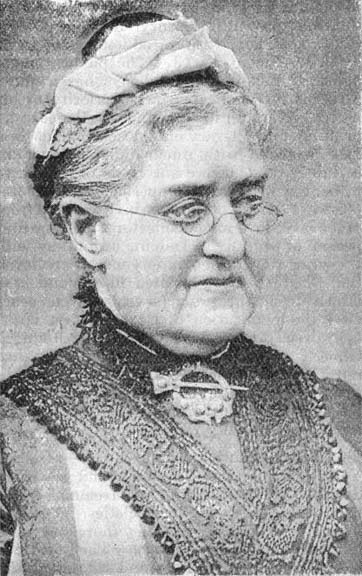
Eliza Lynn Linton
Source: Victorian Web
‘Crossing over’ in life-writing has been something of a hot topic this week. It has also been brought to my attention by the recent arrival through the post of Eliza Lynn Linton’s ‘autobiography in drag’, the gender-bending The Autobiography of Christopher Kirkland (first published in 1885; reissued in 2011 by Victorian Secrets). Though we are unlikely now to be surprised by a nineteenth-century woman writer adopting a male pseudonym, there is something distinctly ‘queer’ about this case.

Linton did not require a male pen-name to facilitate her entrance into the literary public sphere; she was already a well-known writer in her own right, and in her own name. Rather, the shift in gender enables (and mitigates) a rather frank revelation of lesbianism. I’m looking forward to reading this book over the coming weeks, and I’ll be keen to see whether Linton’s “literary transvestism” (as it is described on the back cover) is truly liberating. Will the adoption of a male persona restrict Linton’s narrative in other ways? Will it require a certain performance in terms of plot and gendered speaking posture? I guess I’ll have to get reading…